4 Members
Designer/Researcher
Jan 2025-May 2025
Figma, Miro, Procreate
With the rise of e-commerce and limited in-person shopping options for college students, young women often face overwhelming uncertainty when buying clothes online. Promotional images are overly stylized, size charts inconsistent, and user reviews vague or unhelpful, leaving shoppers unsure about fit, style, and quality. As part of a 4-member team, I contributed as a UX researcher and designer to create FitMatch: a community-driven platform that helps users make confident clothing purchases. By leveraging peer validation, realistic fit visuals, and personalized recommendations, FitMatch empowers young women to shop online with greater trust and satisfaction.
Young female college students face uncertainty and information overload when making online clothing purchases, hindering confident decisions.
Young women represent a significant share of the online fashion market. 53.4% of all online shoppers are women, and those aged 18 to 24 account for 46.9% of this group. Yet, they face persistent challenges when shopping online. Inconsistent size charts, overly stylized product photos, and vague user reviews make it difficult to gauge how clothing will fit or look in real life. This lack of trustworthy, detailed feedback often leads to hesitation, dissatisfaction, and costly returns. As online platforms prioritize promotional content over shopper-centered information, there is a pressing need for tools that empower users to make confident, informed decisions.
The rapid ethnography combined with contextual interviews allowed us to “be there” and observe participants in their natural environments as they navigated online shopping platforms. By pairing observations with contextual interviews, we could bridge the gap between what users say they do and their actual behaviors, capturing both habits and emotional drivers. I was responsible for conducting 1 out of the 4 interviews. The co-design gave us a way to surface tacit knowledge through sketching, scenario-based tasks, and interactive design activities. This participatory approach allowed users to become collaborators in generating solutions, ensuring our designs reflected their lived experiences. I was responsible for conducting 1 out of the 2 workshops with my partner.

Participants heavily relied on social media platforms like Instagram and Pinterest for style inspiration and peer validation

User-uploaded photos and reviews were more trusted than stylized product images, especially when reviewers shared body measurements and fit notes

Despite advancements in online retail, participants struggled to visualize fit, fabric quality, and color accurately, leading to hesitation and extended decision-making times. Fit and material were main priorities for participants

Strong interest in 3D avatars based on body measurements and virtual try-on tools, participants preferred anonymized avatars for comfort
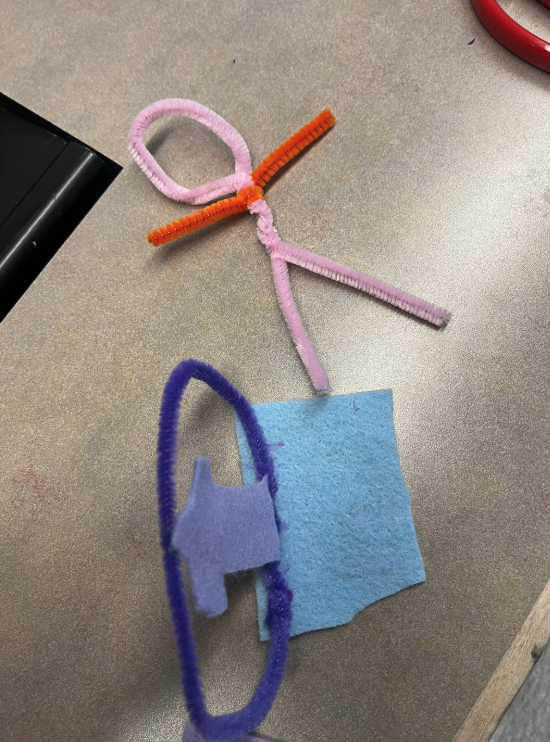
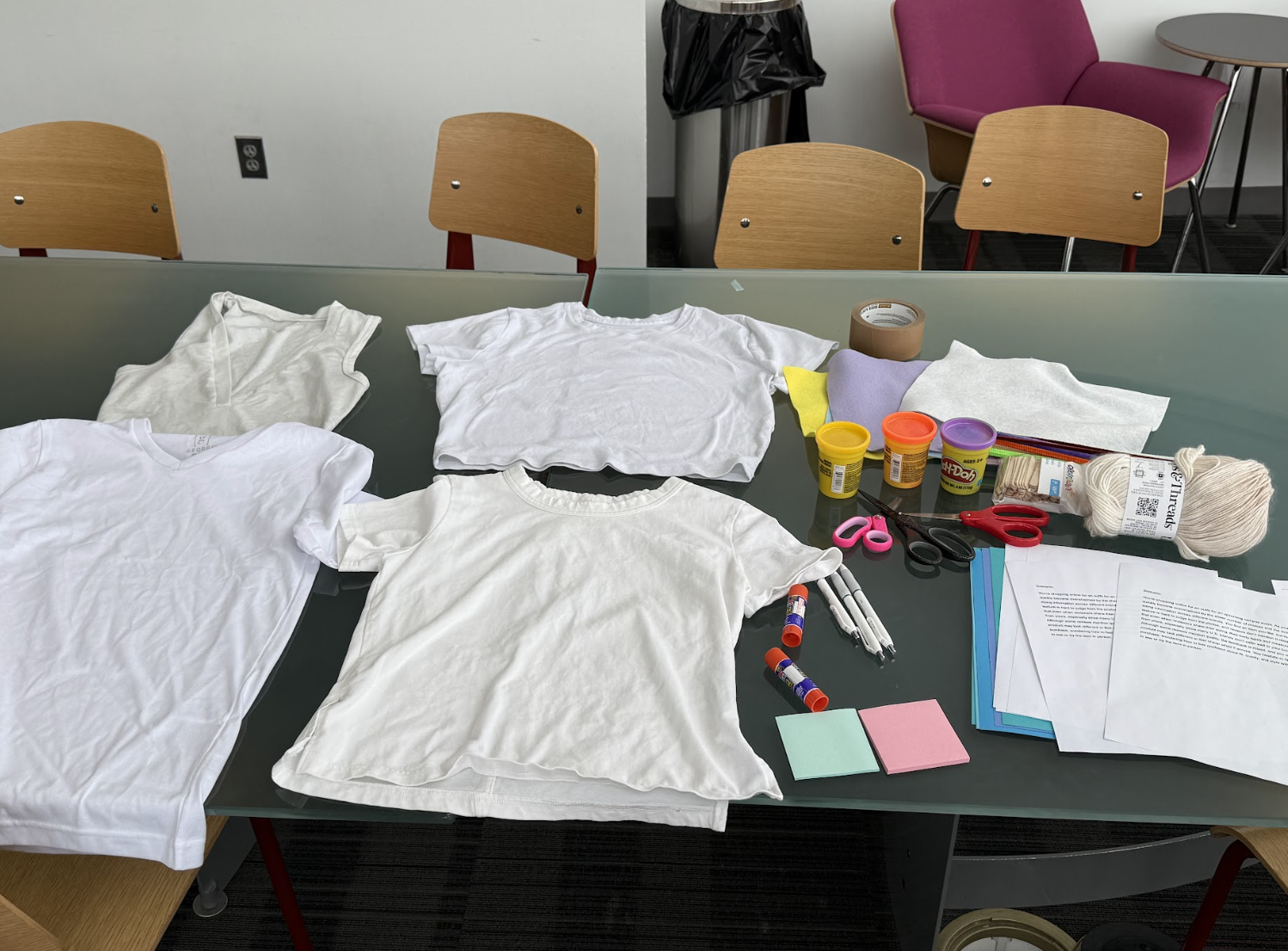
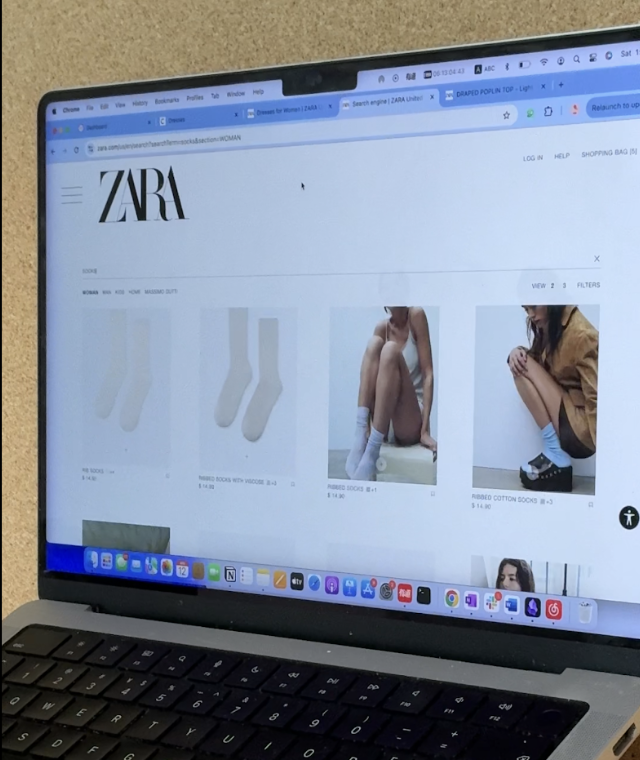
These are some design opportunities from our findings:
Fit and Texture Uncertainty
Participants struggled to visualize fit, fabric quality, and color due to discrepancies between product images and reality

Explore ways to provide more realistic, user-centered visuals, such as crowdsourced fit photos or tools for shoppers to share how items look on their body type, to help users better evaluate clothing online
Trust and Social Validation
Users distrusted stylized model images and craved peer input to make confident decisions
Consider creating a system where shoppers can engage with and learn from each other’s experiences. This could include features for uploading reviews, sharing photos, or building a supportive community to foster authentic, peer-driven feedback
Desire for Enhanced Visualization
Participants expressed interest in virtual try-on tools and customizable avatars based on body measurements but preferred privacy-preserving solutions
Design visualization tools that allow users to see clothing on relatable body shapes without requiring them to share personal photos or identifiable data
We began our design process with low-fidelity sketches to quickly explore and communicate ideas informed by our research findings. We propose the design of FitMatch, an innovative app designed to enhance online shopping experiences by addressing key challenges identified in our research. Central to our design is the emphasis on personalized fit and fostering a supportive community environment.
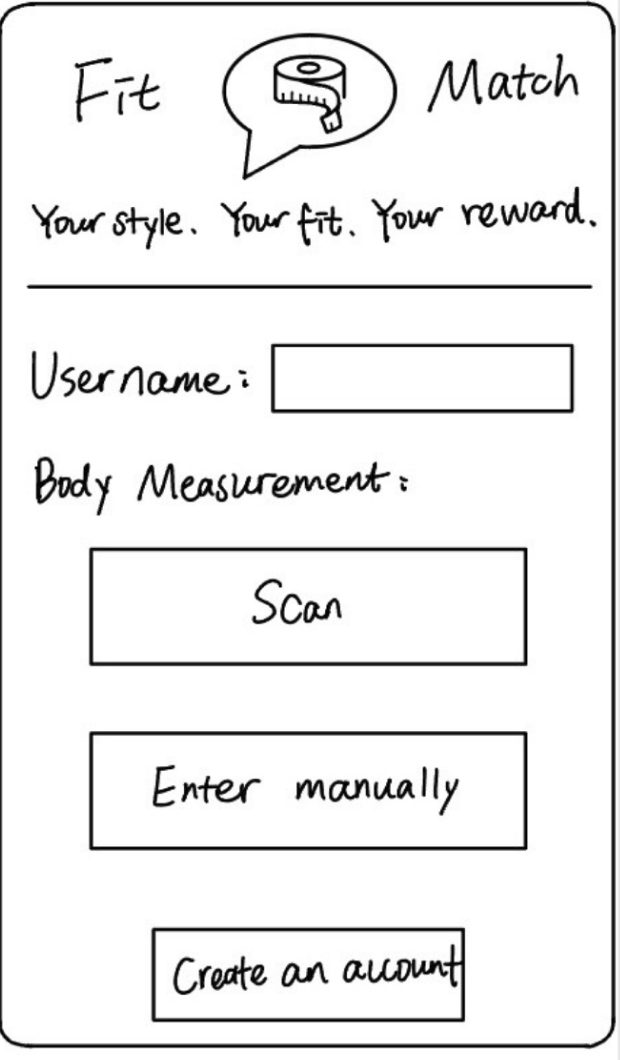
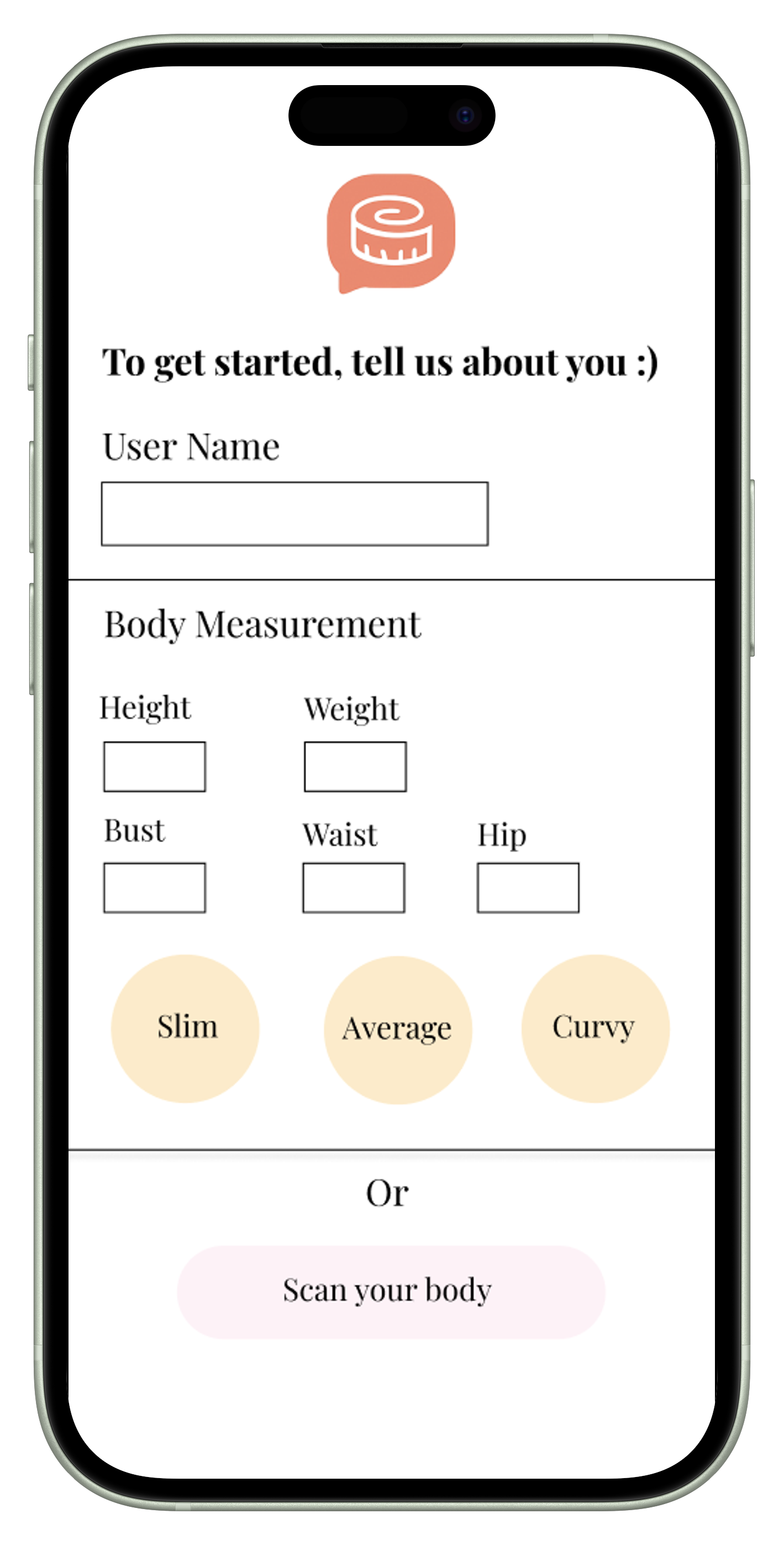
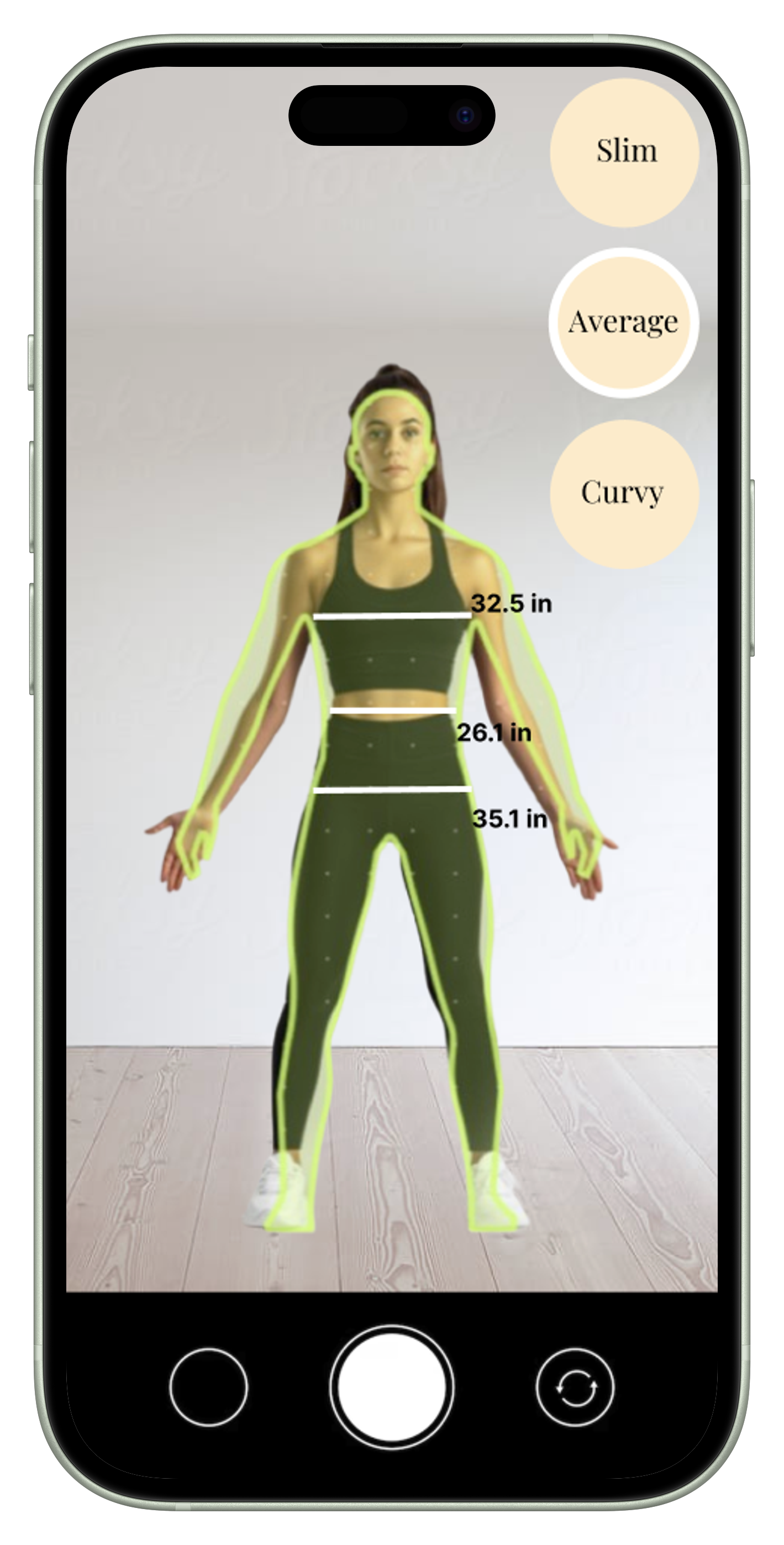
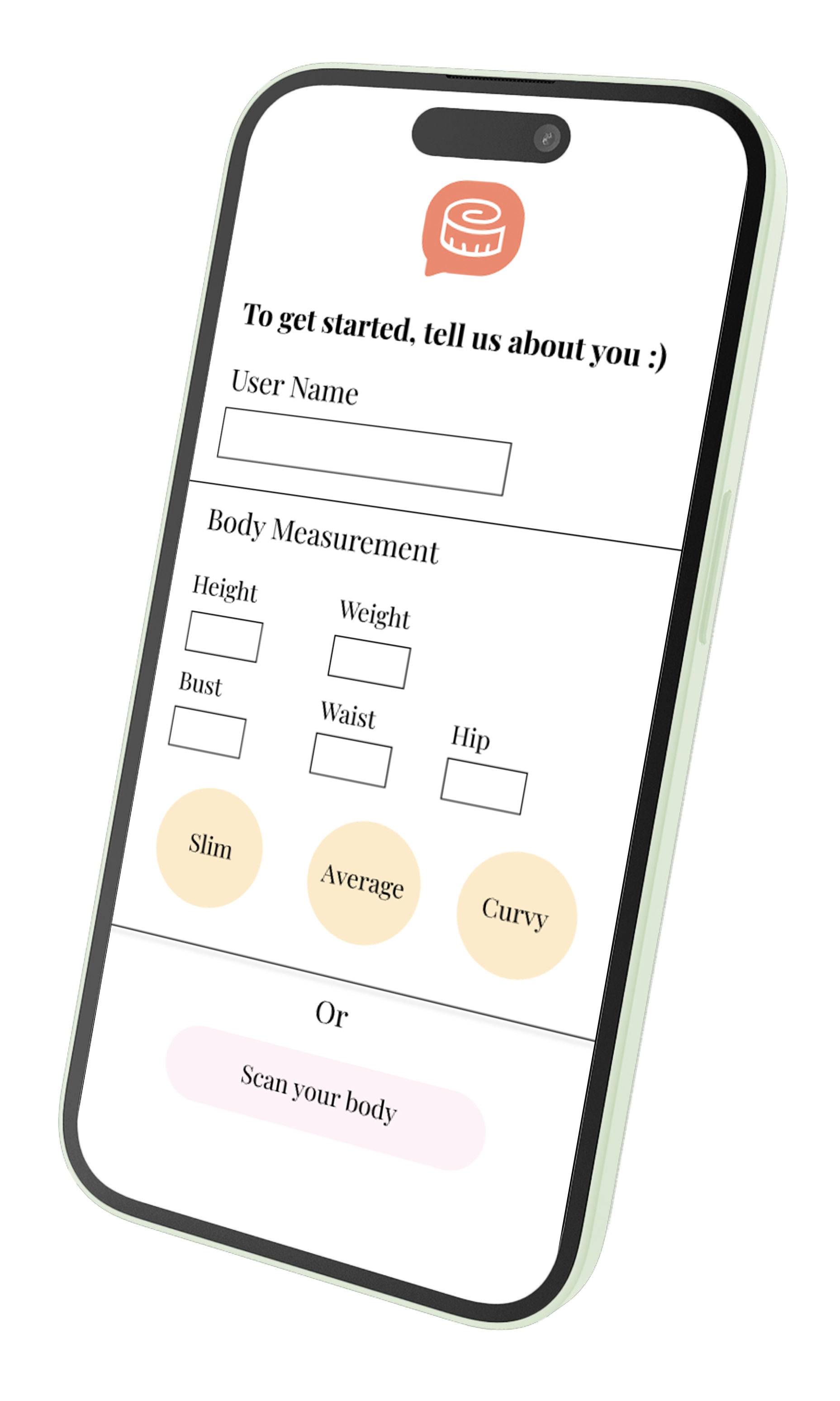
Users struggled to estimate fit and preferred visualization tools like 3D avatars tailored to their measurements
Here, users can input their body measurements manually or scan their body to create a personalized avatar. This empowers them to see clothing visualizations based on their unique shape while keeping anonymity (no need to show their face), which participants preferred for comfort
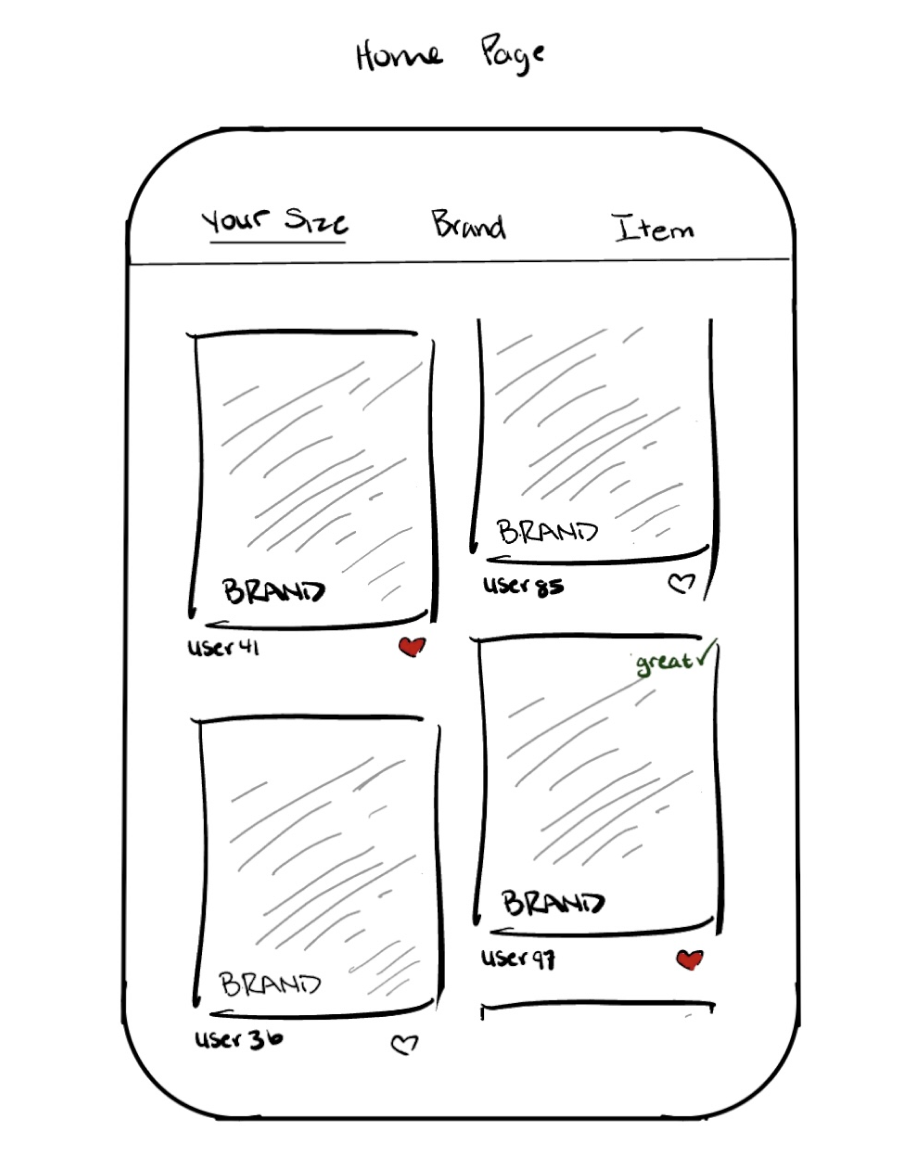
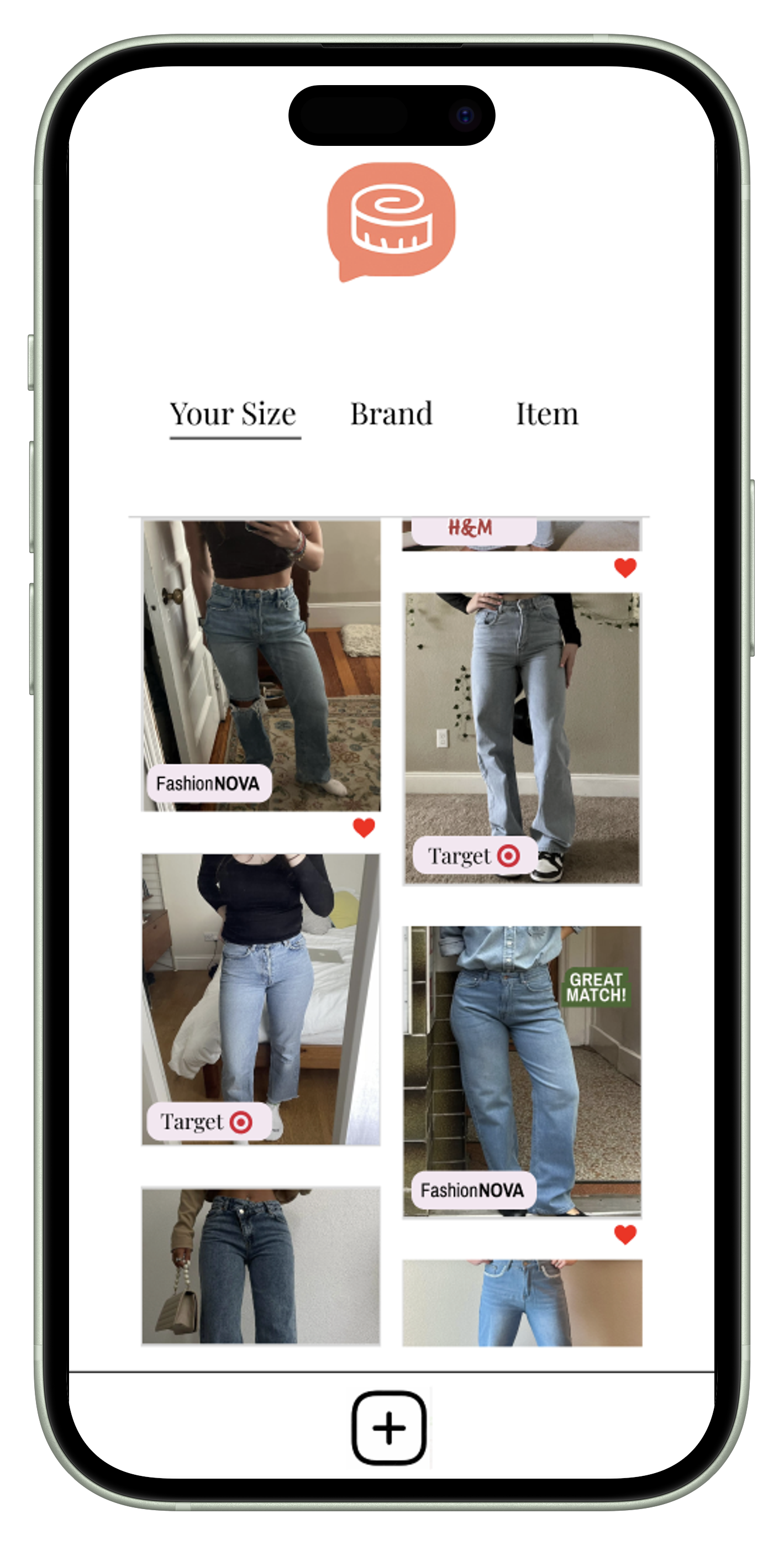
Users felt overwhelmed by generic product listings and wanted real-world photos from people like them
The “Fit for You” feed curates posts from users with similar body types, sizes, and preferences. Filters (by size, brand, and item) make it easier to navigate and discover relevant posts. This directly addresses the issue of information overload and gives users confidence in how an item might fit them
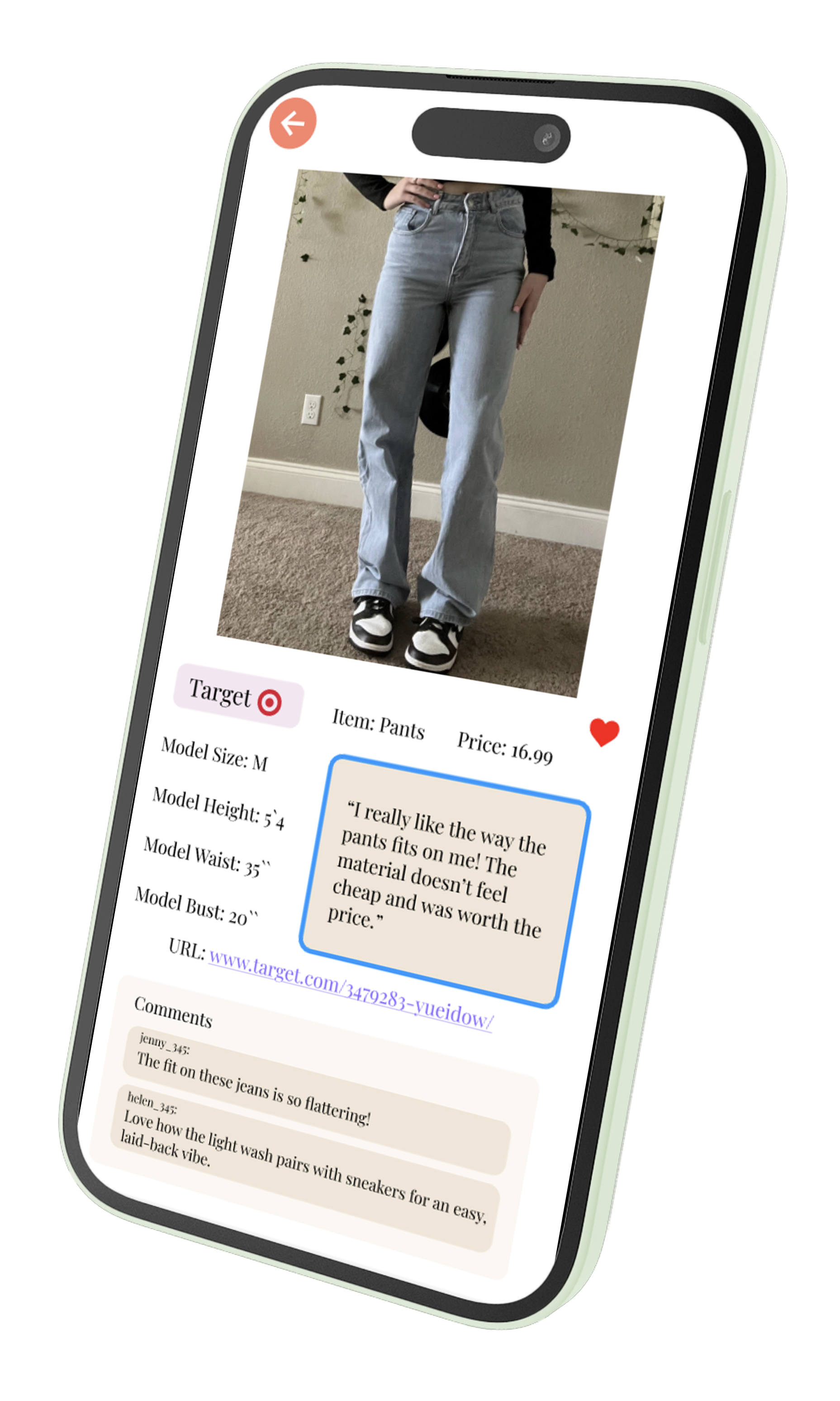
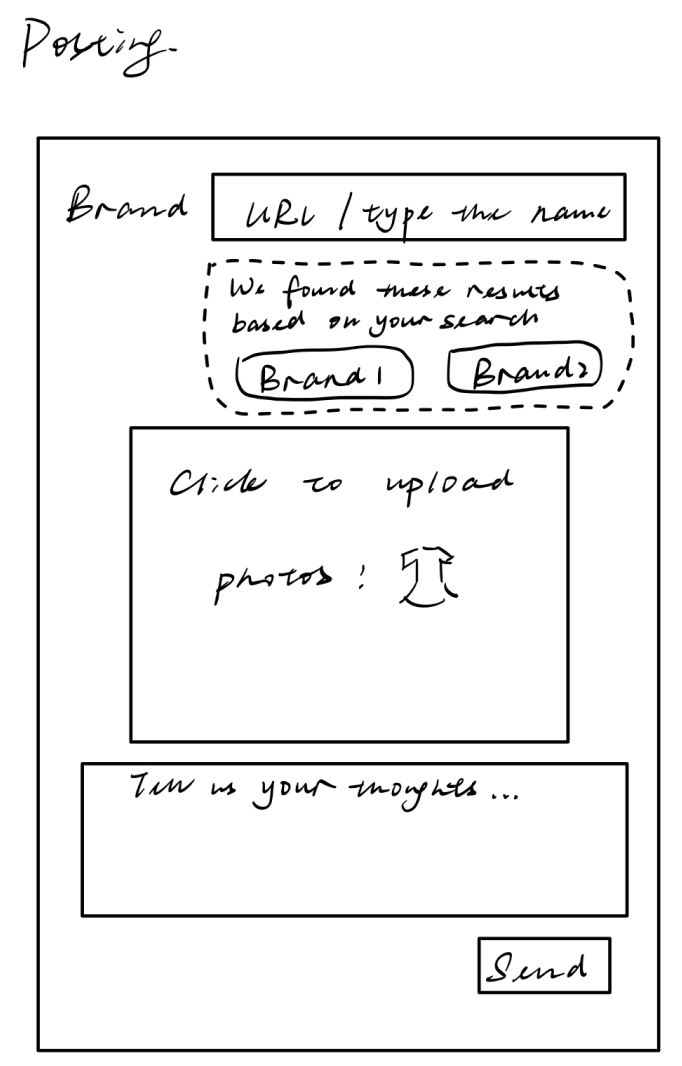
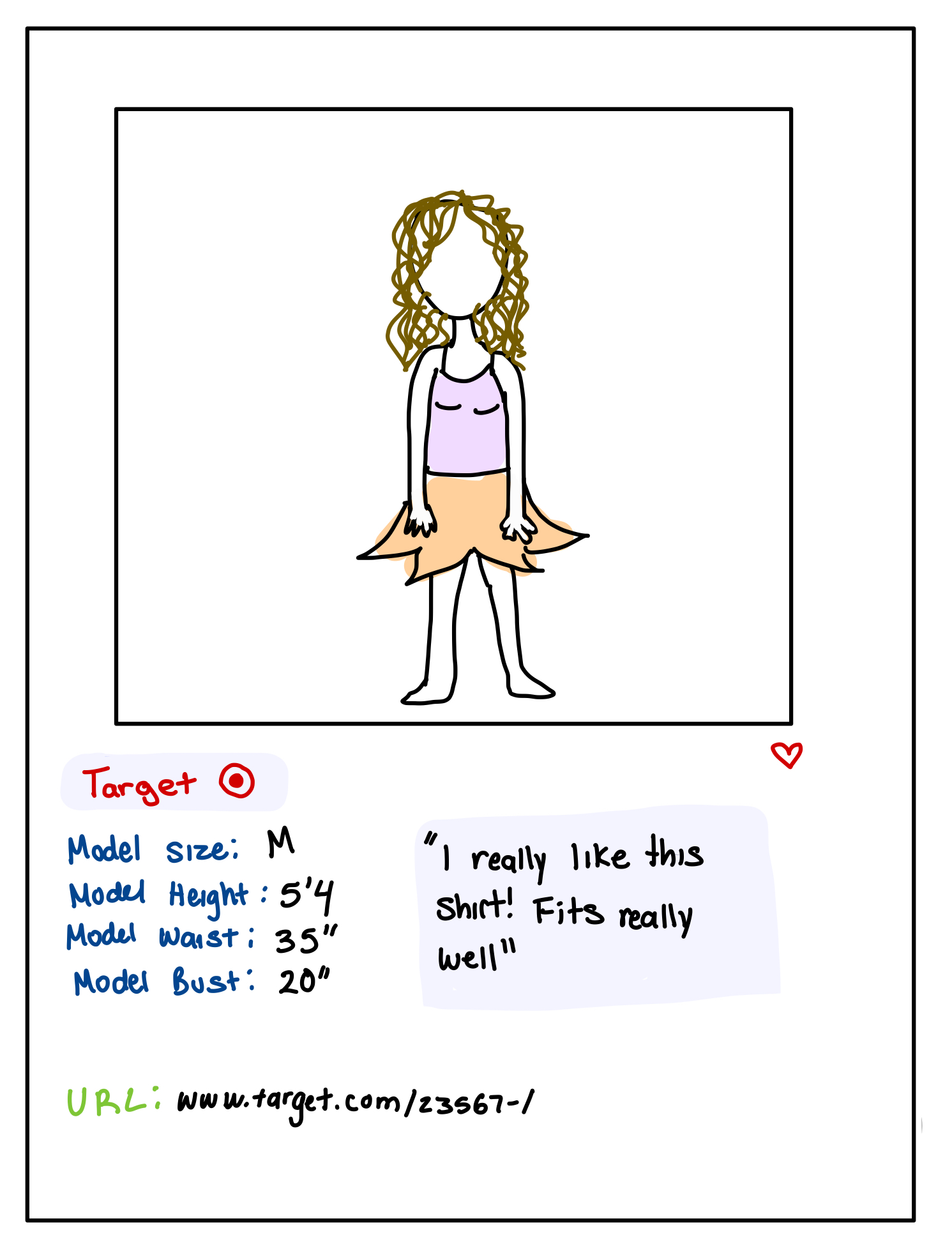
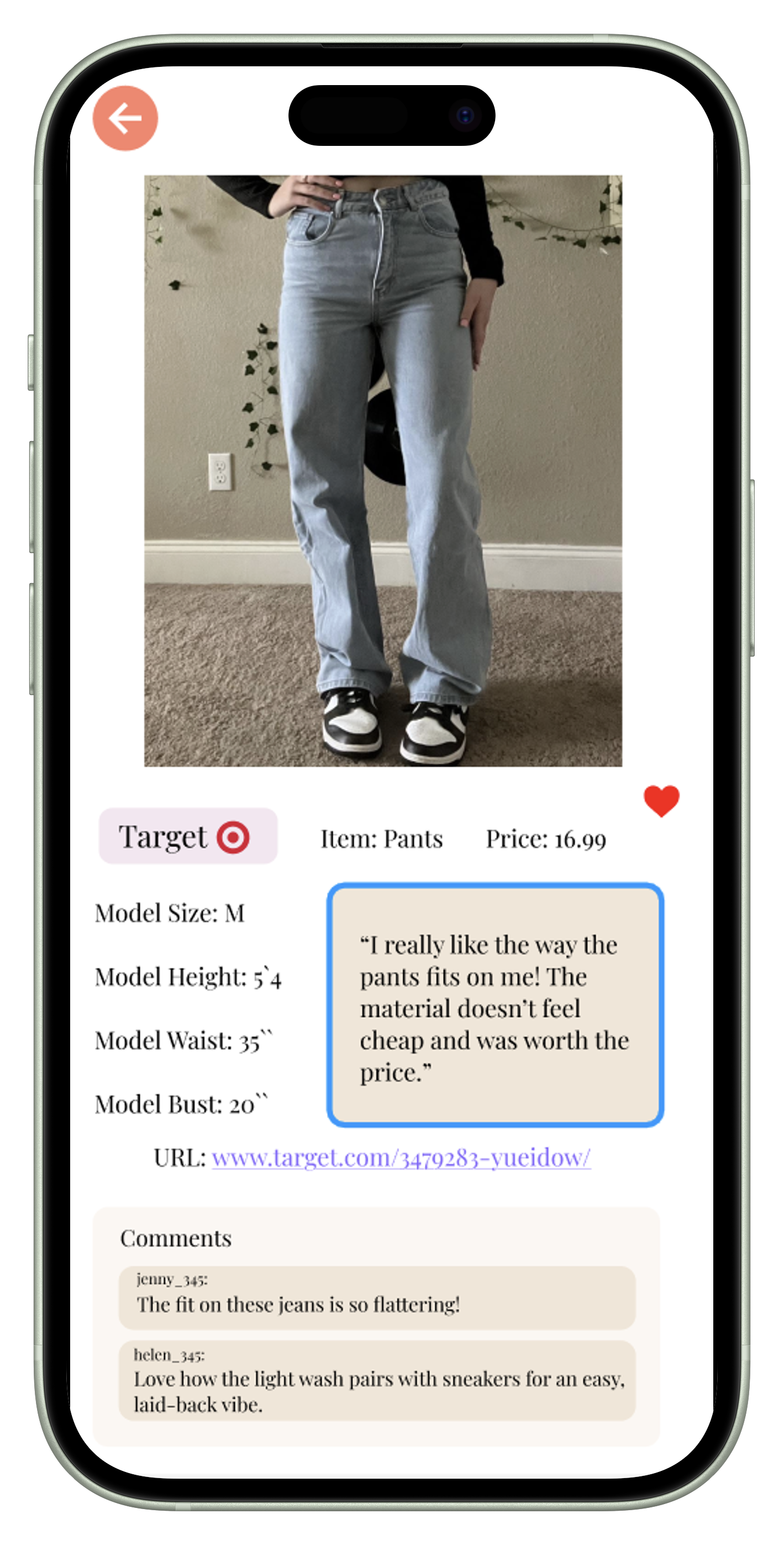
Participants wanted reviews with specific sizing details and visuals showing fit on different body types
I designed this page end-to-end, ensuring it aligned with user needs for detailed sizing information and real-world visuals. Each post displays a user-uploaded image, key body measurements, and their fit comments. This transparent, community-generated content bridges the gap between promotional imagery and real-world fit, building trust and helping users make informed decisions
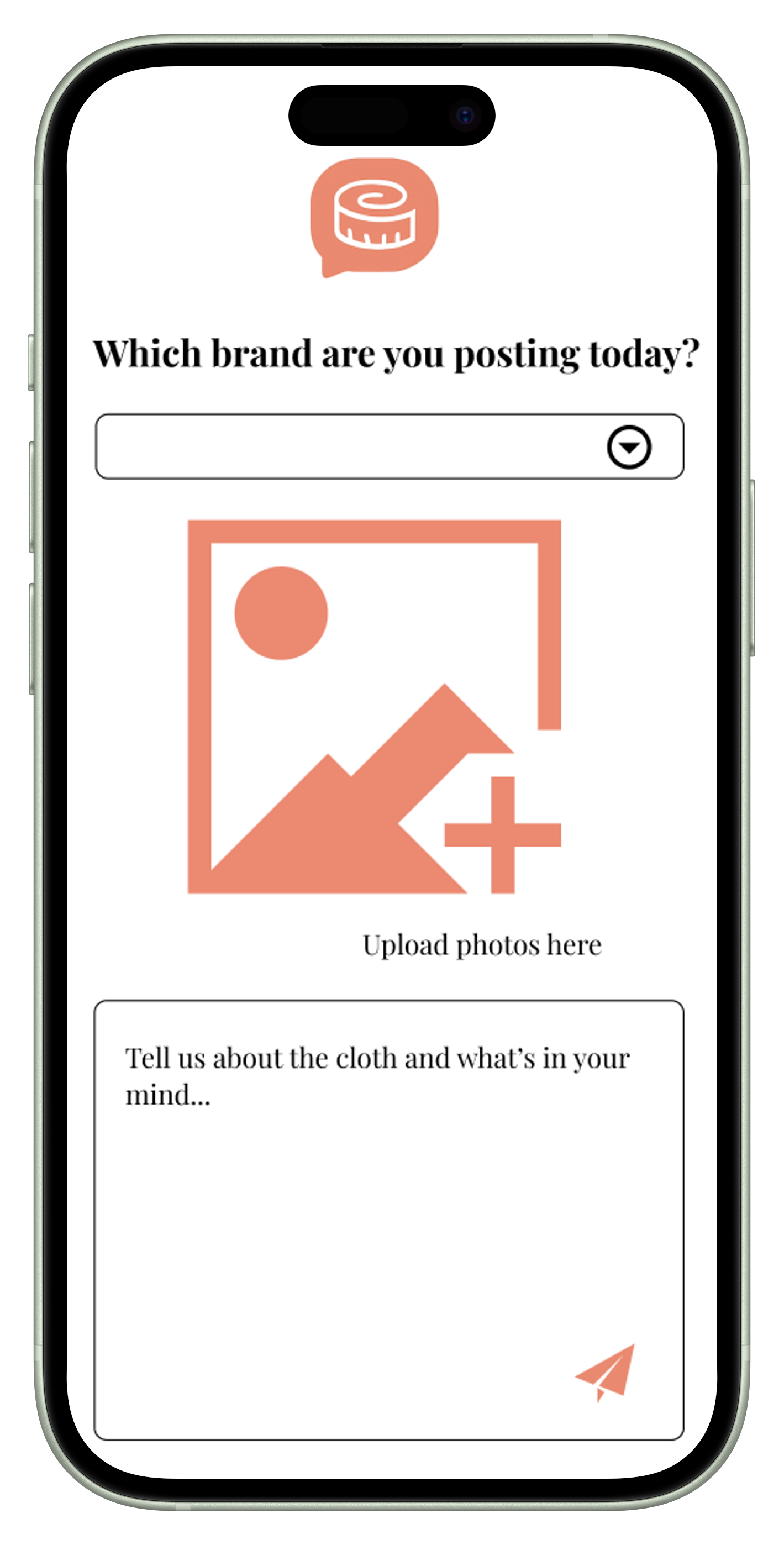
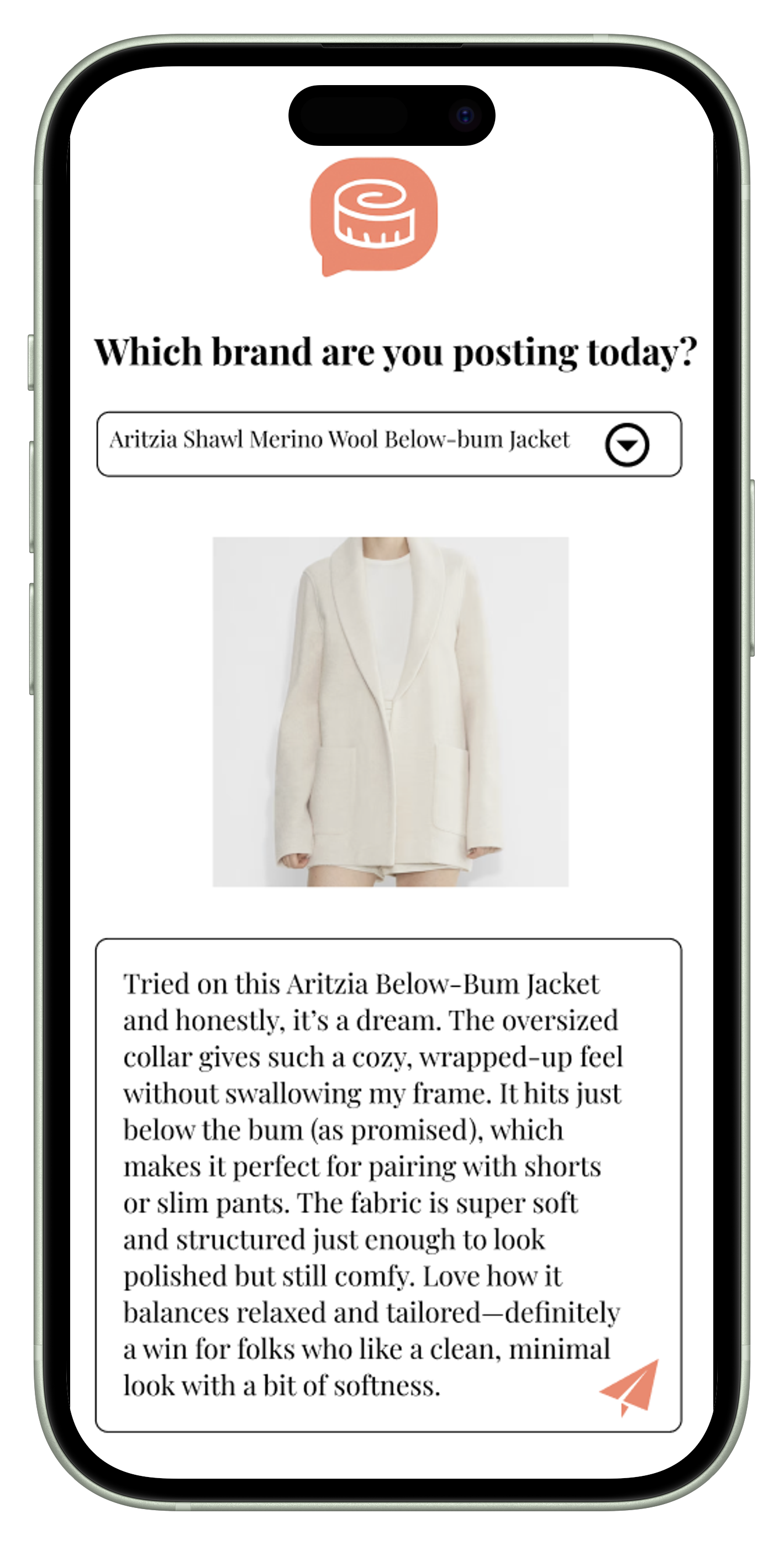
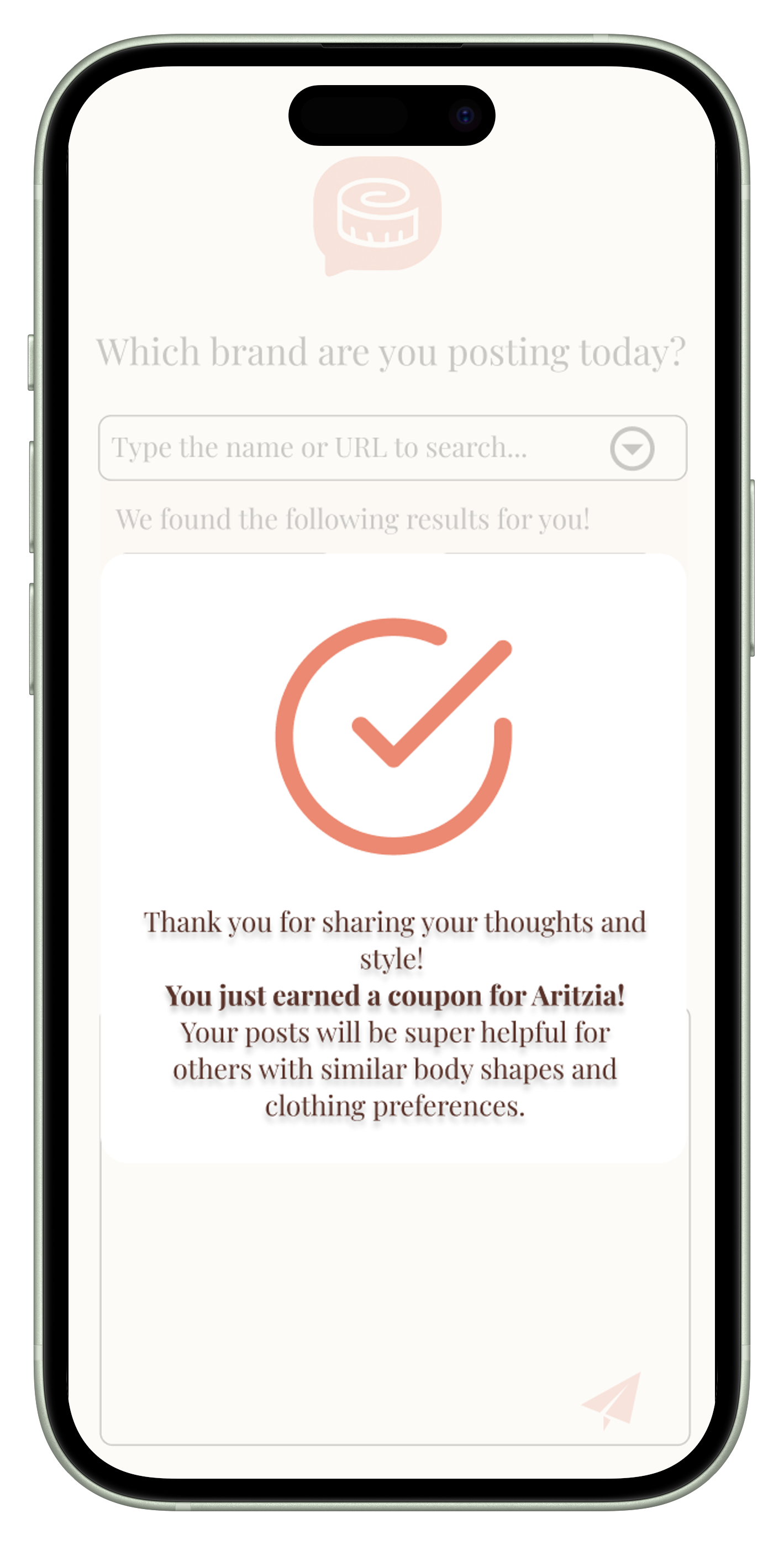
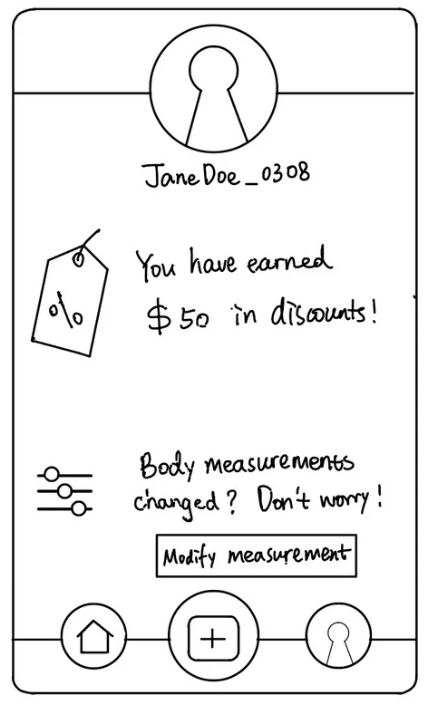
Users worried about sustained platform engagement and the need for incentives to contribute
I took the initiative of coming up with a reward system where the profile page tracks rewards earned from posting reviews and photos, showing users how their contributions benefit them (e.g., discounts). It also allows easy updates to body measurements, keeping avatar visualizations accurate over time. This gamified approach motivates users to stay active and continue enriching the community

Although emerging technologies like virtual try-ons and recommendation systems address fit uncertainty, most solutions are designed from a top-down, tech-driven perspective. They often overlook the emotional and social dimensions of online shopping, such as the need for peer validation, representation of diverse body types, and community-driven trust building. FitMatch reimagines the online shopping experience by centering the voices of users themselves. Through participatory design methods like co-design workshops and ethnographic research, we developed a platform that emphasizes:
By focusing on both practical and emotional needs, FitMatch empowers users to shop confidently and feel represented in a space that prioritizes their lived experiences.
While our design emphasized real-world visuals and body-matching, it couldn’t fully replicate the tactile experience of trying on clothing, like feeling fabric texture or stretch. We also recognized that the platform’s success depends on sustained user participation and the accuracy of self-reported measurements, which could vary across users. In future iterations, exploring ways to integrate physical-digital touchpoints, such as partnerships with retailers for in-store scanning or fabric sampling, could help bridge this gap. Additionally, building stronger incentives and community engagement strategies would support more consistent contributions from a diverse user base.



This website was coded and designed by me from scratch on VS Code!